
Taste Is Not a Moat
Or: why Starry Night sucks.

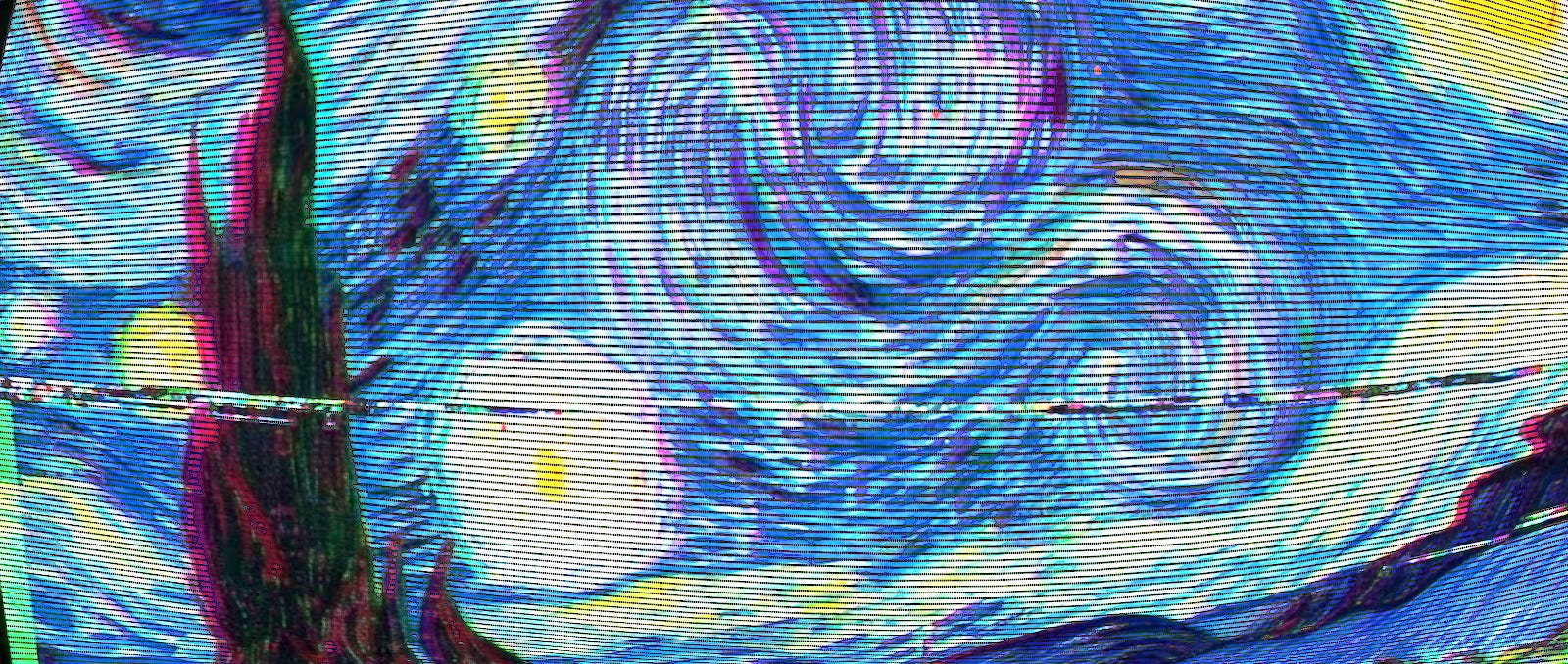
Vincent van Gogh died at thirty-seven. In his lifetime, he sold one painting.
One.
His contemporaries at the Salon, the institution that decided what qualified as art in late nineteenth-century France, viewed him as a demented figure with no talent. The Salon’s rubric was academic realism: precise brushwork, classical composition, faithful representation. Van Gogh failed the rubric.
And it wasn’t because Vincent was a bad painter with bad ideas, it was just that the rubric was wrong. So, instead of changing Van Gogh and his paintings, someone just changed the definition of what good paintings meant.
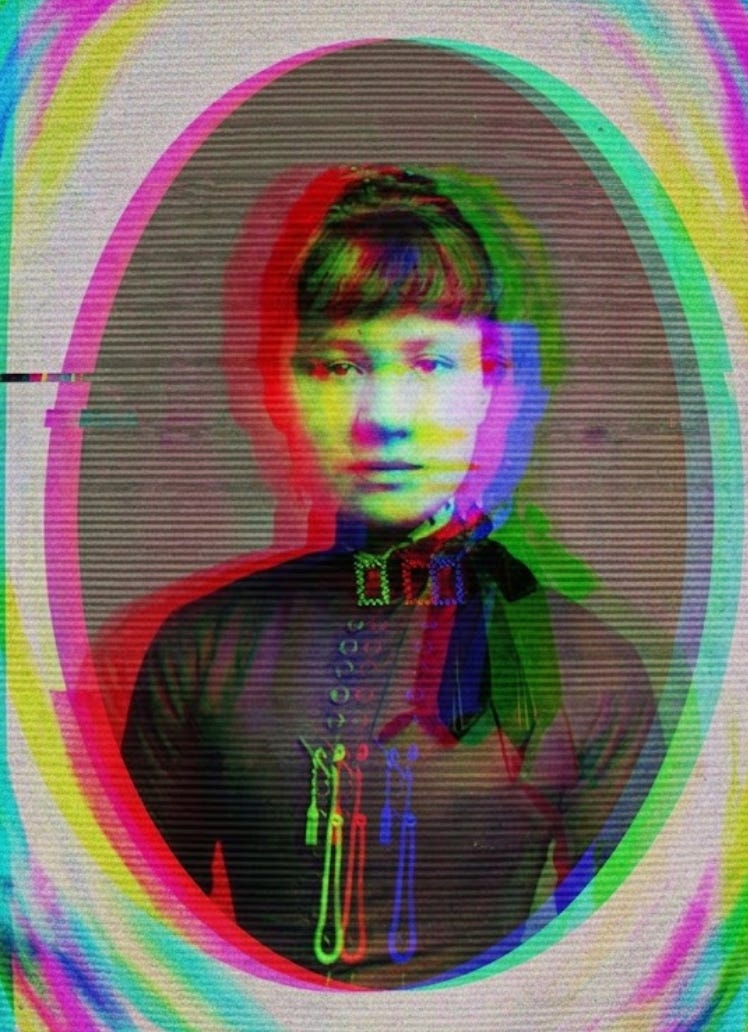
Johanna van Gogh-Bonger. Jo. A twenty-eight-year-old widowed English teacher with a baby and roughly two hundred paintings nobody wanted. Her husband Theo (Vincent’s brother and sole champion) had died six months after Vincent. She inherited not a fortune but a storage problem.
Over thirty-five years, Jo organized exhibitions across Europe. She translated and published the letters between Vincent and Theo, constructing the tortured genius narrative that would define how the world understood him. She made strategic sales to public collections, seeding Van Gogh into the institutional frameworks that confer legitimacy. And in 1905, she staged the largest Van Gogh exhibition ever held: 484 works at the Stedelijk Museum in Amsterdam. After the show, prices doubled and tripled.
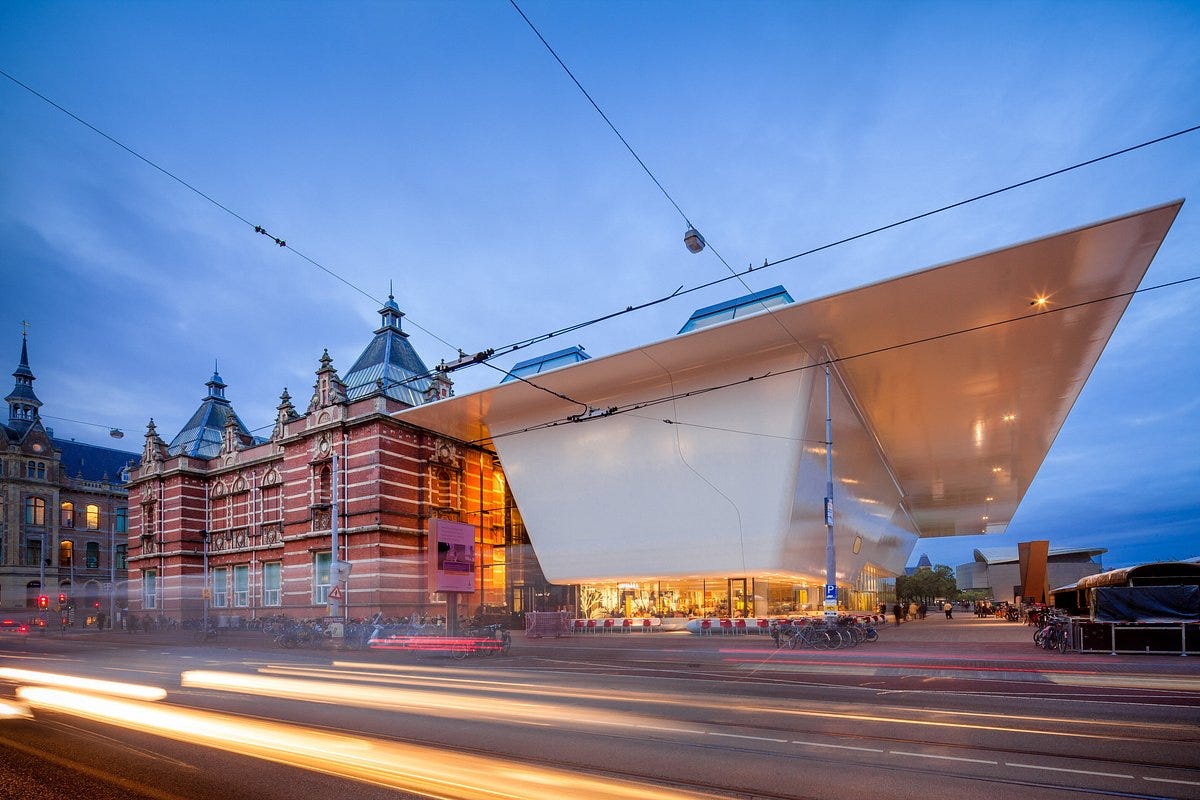
One male critic dismissed her exhibition notes as “schoolgirlish twaddle.” She persisted. She sold two hundred paintings and fifty-five drawings over three decades.
“It is a sacrifice for the sake of Vincent’s glory.”
Jo did not change the paintings. She built the framework through which the world could see what was always there. She manufactured taste. Jo’s masterstroke was not the exhibition. It was where she held it. She did not take Vincent’s paintings back to Paris, where the Salon’s rubric would have buried them again. She showed them in Amsterdam, Berlin, Copenhagen. To audiences who had never been told Post-Impressionism was a failure. Who had no existing framework telling them the brushwork was crude.
Picture Starry Night in your mind; or, let me help you since this essay is also a visual medium of sorts:
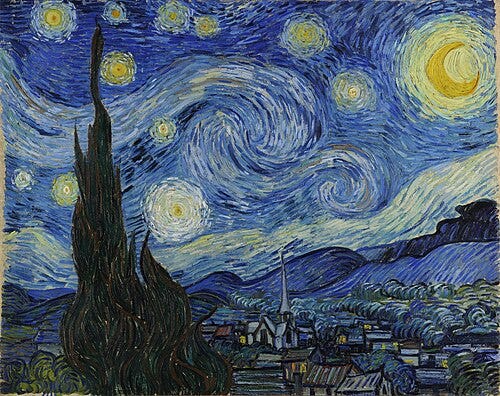
Crude. Barely a painting.
Ughhhhh. Tasteless. It looks like fried dough-balls floating in the sky. And what is that black thing, a squiggle?
But Jo had served Van Gogh to people who had never tasted Van Gogh before. Without the rubric telling them it was bad, they tasted it honestly. And they thought it was extraordinary. Does this mean that taste only exists when there is no other competing, overpowering taste? Or if there is, does removing the competing tastes let the remaining ones stand out more? This would mean that taste is not innate, it is relational. It only exists in comparison to what came before it.
This is the exact same mechanism that turned prison food into a luxury.
The Rock Lobster
Rewind a century and cross the Atlantic to colonial America. No refrigeration. No railroads. Food either walked, grew, or rotted where it stood. Supply and demand meant that if you had a high supply of something to eat, demand to eat it would go down. Luxury almost always means rarification, and in colonial America, put your bib and butter away because Lobster was so abundant it washed ashore in two-foot piles. Servants negotiated contracts limiting how often they could be fed it (not more than twice a week, according to surviving indenture agreements). Prisons served it to inmates. It was fertilizer. Bait. Poverty food.
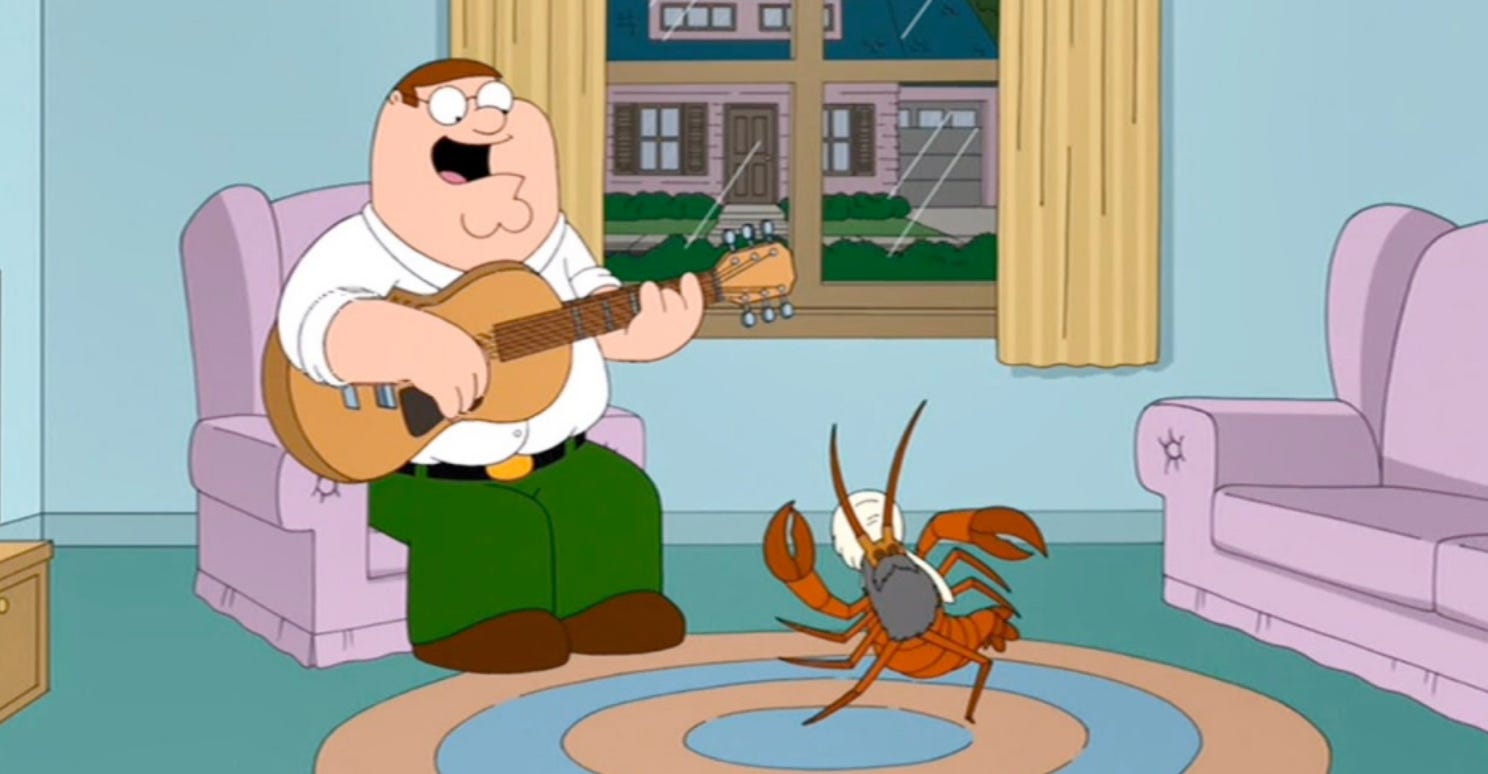
Then the railroad companies came in the mid-1800s. They served lobster to inland passengers who had never seen the coast and had no existing rubric for what lobster “meant.” No cultural context of poverty and disgust. These passengers tasted it without the framework. They thought it was delicious.
Demand for lobster rose, as did the presumptive profile on what taste meant when it comes to seafood and shellfish. By the 1920s, lobster was now a luxury. By the 1950s, it had become the most expensive item on the menu. Same animal. Same flavor. Entirely reversed meaning. The lobster did not change. The rubric changed. The people evaluating it changed. Remove the cultural context, and the “taste” reversed completely. Just like Starry Night, there does not seem to be an innate quality. Lobster didn’t taste good, and then it did, because we decided it did.
So who were the tastemakers? The rail barons. Look at how far taste could travel in 1850
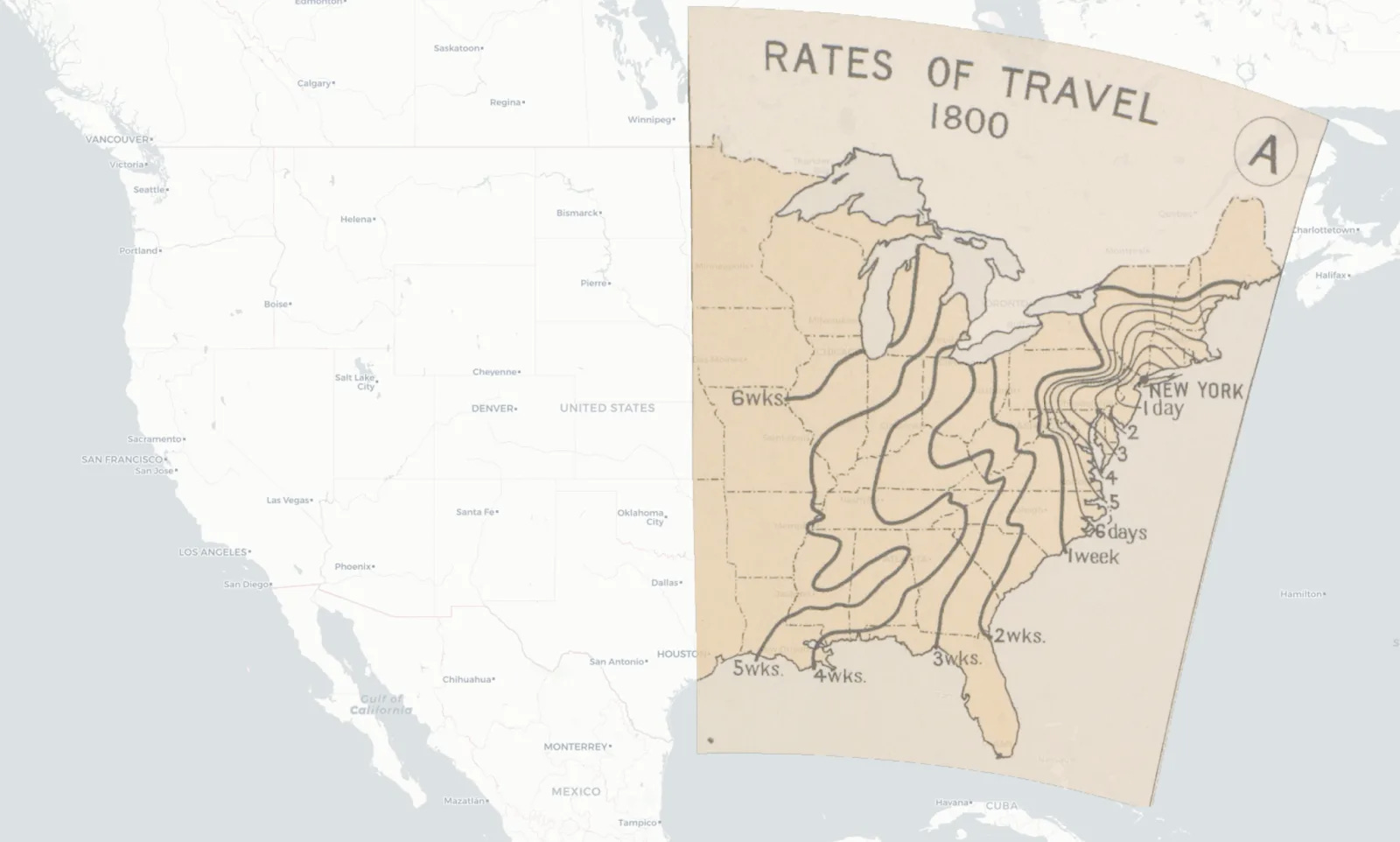
Now, 57 years later, look at how much further, and faster, taste could travel.
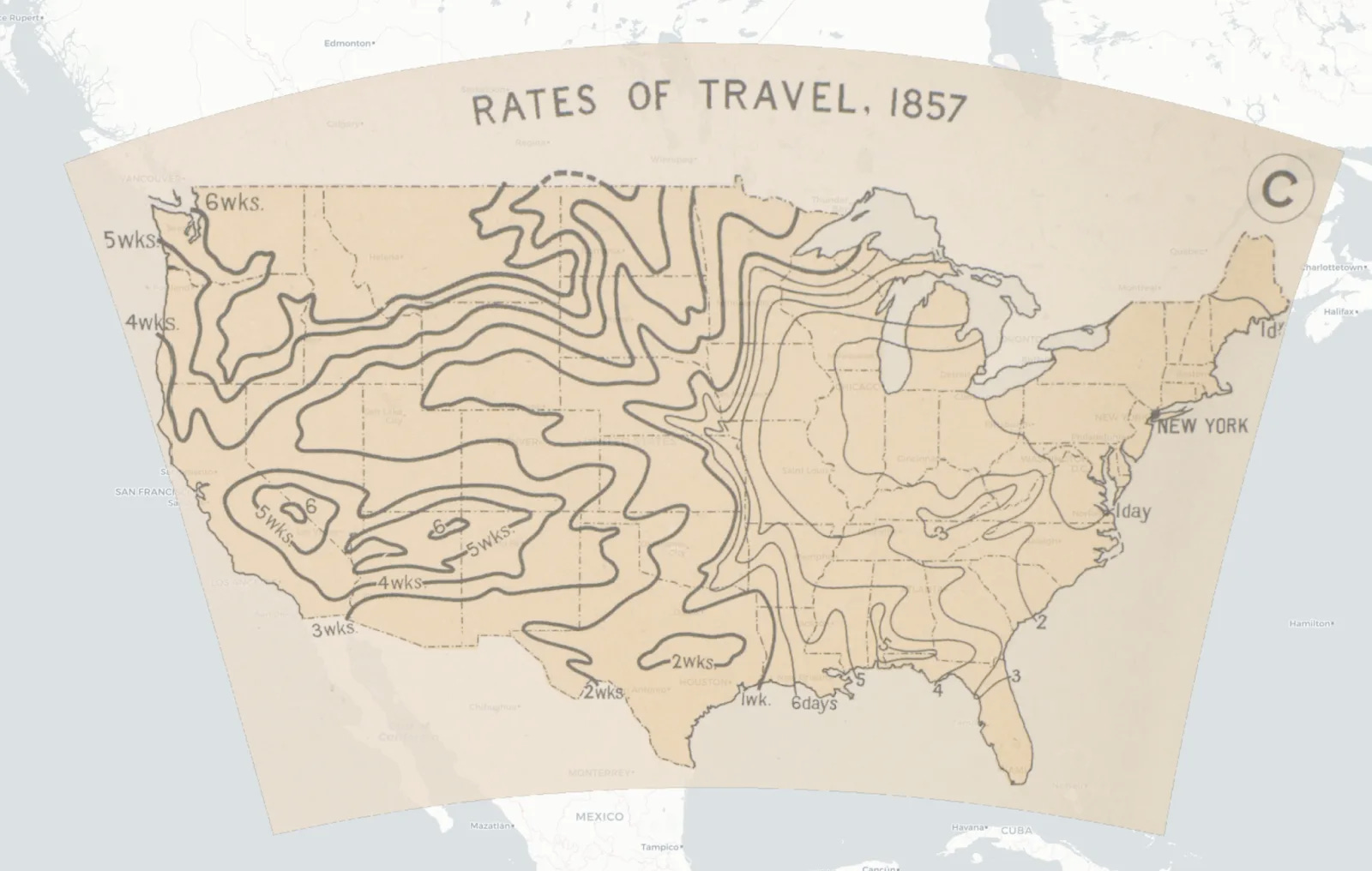
The railroads did not just change what Americans ate. They changed how taste reached American mouths. The same continental rail infrastructure that accidentally created the luxury lobster market by serving it to rubric-free passengers became, within decades, the distribution backbone for a different product entirely: bottled soft drinks.
Coca-Cola’s early empire was built on railroad distribution. By the 1920s, the same tracks that carried lobster to passengers who did not know they were supposed to hate it were carrying Coca-Cola to every town in America.
Decades before Coke taught the world to sing, the railroad taught the country that taste is contextual. Coca-Cola would prove that taste is also a weapon. Why try to compete with better taste when you can just poison the well entirely.
Catch that magic moment
I remember the Pepsi Challenge, a commercial so memorable it has become a term for any sort of side-by-side comparison. Blind taste tests across shopping malls in the 1970s and 1980s proved, repeatedly, that people preferred Pepsi. Coca-Cola panicked. They reformulated. New Coke won taste tests too. People preferred it. They hated it anyway. The tongue voted yes. The rubric overruled it.
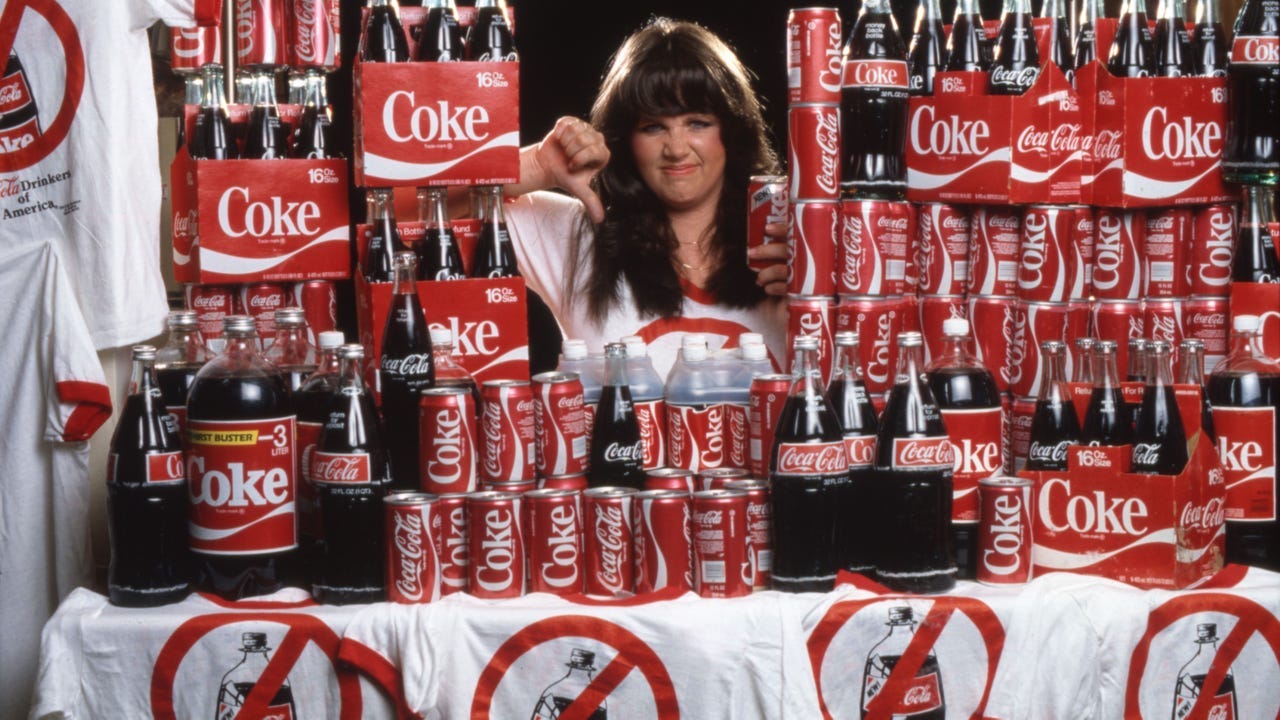
Because taste was never about the liquid. It was about the red can, the Santa Claus ads, the identity of being a Coke person. Taste was post hoc rationalization of brand loyalty. The tongue said one thing. The rubric said another. The rubric won. But the Cola Wars produced something far darker than a reformulation fiasco. They produced espionage and targeted assassinations.
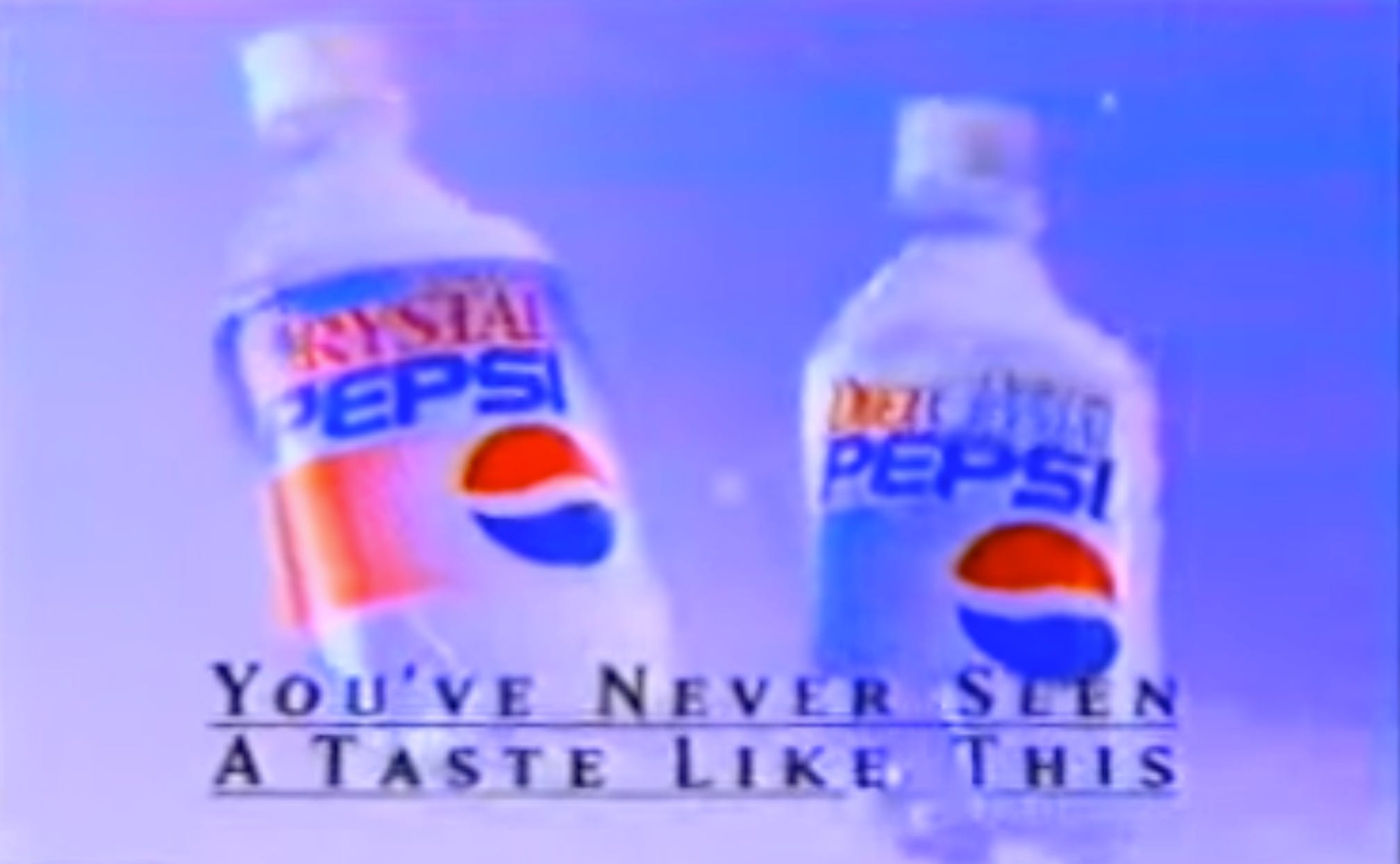
Pepsi launches Crystal Pepsi. Clear cola. I loved it, I remember riding my BMX bike down to my nearby market to get a cool, crisp, clear Crystal Pepsi. $474 million in first-year sales. It was an unstoppable juggernaut. Pepsi had already been winning taste tests, sponsoring the biggest musicians, actors, it was the taste of a new generation. Coke had ups and downs, was a legacy brand, too anchored to a nostalgic past to go head to head with Pepsi. So they did what power does when it can’t win on merit: it sabotaged the rules of the game.
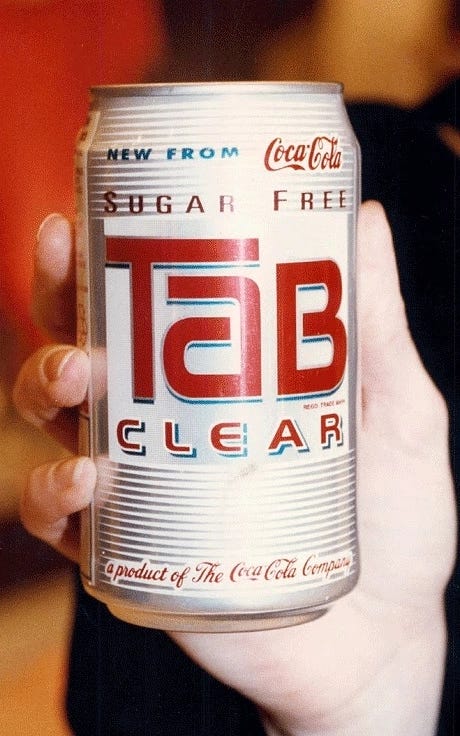
Coca-Cola’s CMO Sergio Zyman (a former Pepsi executive, which should tell you everything about the play that followed) launches Tab Clear: a deliberately terrible diet cola positioned next to Crystal Pepsi on the shelf. The first salvo in the Taste Cold War. Coke didn’t have to create a clear cola that tasted better than Crystal Pepsi, and it didn’t have to create a product that would pull thirsty drinkers away from clear colas with a more tasteful alternative.
All they had to do was make a bad product and start to associate clear colas with bad taste. Tab Clear, aka, Liquid (gl)Ass:
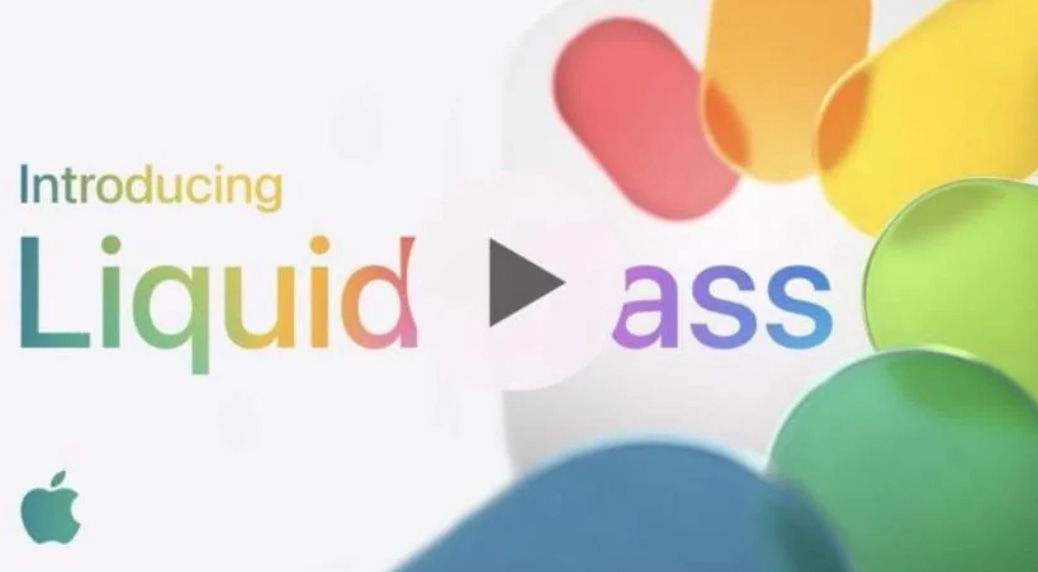
It was never meant to succeed. It was designed to confuse consumers into thinking Crystal Pepsi was a diet drink. Tab Clear was labeled “sugar free” to reposition Crystal Pepsi by association. Maybe you’re in a gas station or supermarket and see a Tab Clear, and associating it with normal Tab, you try one. You hate it. You learn that clear cola tastes bad. Next week, you are in the store again and see a Crystal Pepsi. Yuck city. You already were taught clear colas taste bad.
“It was a suicidal mission from day one,” Zyman said later. Tab Clear was born to die. Within six months, both clear colas were dead. Coca-Cola spent millions deliberately destroying their own product to kill the competitor’s. Pepsi had spent enormous money building the brand, creating a taste people liked, establishing clear cola as something people with good taste should enjoy, “and, regardless, we killed it.”
Taste did not decide the outcome. Market manipulation did. The consumer’s rubric was poisoned on purpose. Again, taste only mattered when we were told it mattered. So, did the market decide? Or did Zyman? Were we told what taste is and just drank it up?
Zyman’s kamikaze strategy worked because of one principle: if you cannot beat the product, reposition the product in the consumer’s mind until they no longer want it. He did not make Crystal Pepsi taste worse. He changed what consumers thought Crystal Pepsi was. He poisoned the rubric, not the drink.
It is a borrowed technique as old as power itself. And another more violent example in American history did not happen in a boardroom. It happened on the streets of Los Angeles, fifty years earlier, and the product being repositioned was not a soft drink.
It was clothing on brown and black bodies. The clear cola craze traded on an association so deeply embedded in American culture that nobody questioned it: clear means pure. Clarity equals cleanliness. Transparency equals trust. And the unspoken inverse: dark means suspicious. Color means contamination.
That same rubric, applied not to cola but to people, had already done its work. Zyman repositioned a product in the consumer’s mind. Fifty years earlier, an entire city repositioned a people.
Troops strippin’ zoots
Go back to Los Angeles, 1943. The zoot suit. High-waisted, wide-legged, tight-cuffed trousers, long coat with wide lapels and padded shoulders. The signature style of Black and Mexican-American youth culture. Expressive. Flamboyant. Defiant. In pre-civil rights America, that was unacceptable.
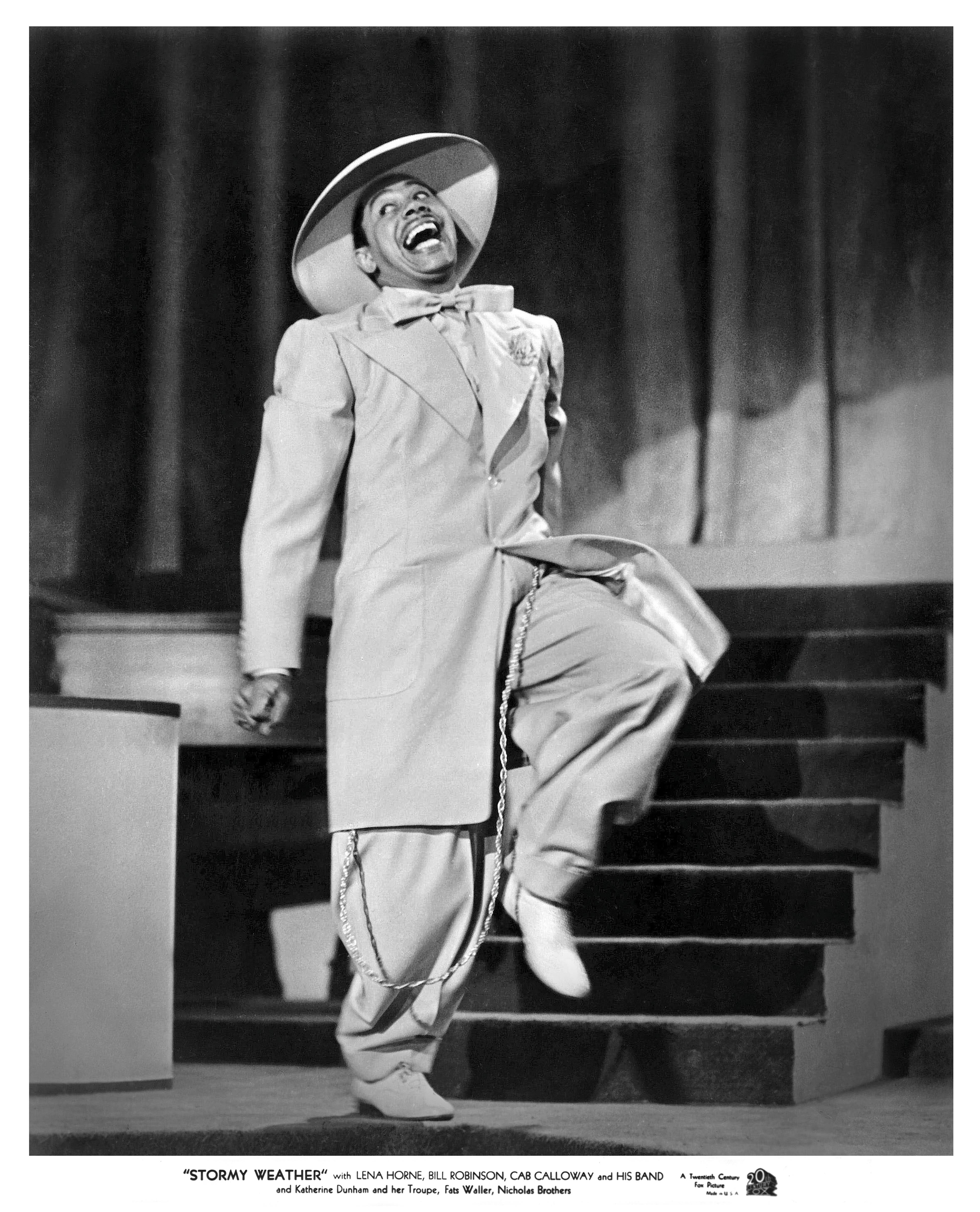
The establishment of white people called it tasteless. Then criminalized it. During the Zoot Suit Riots, off-duty white servicemen beat Black and Mexican-American men in the streets, stripped their suits, sometimes set the clothing on fire. LAPD arrested the victims. The Los Angeles City Council made wearing a zoot suit a misdemeanor, a law that targeted no white person, and everyone knew it.
“Taste” was not an aesthetic judgment. It was a racial one. The suit was not ugly. It was worn by the wrong bodies. There was no inherent rightness or wrongness to the Zoot Suit, it was simply deemed as bad taste. This pattern has occurred again and again with black, brown, and minority cultural hallmarks in America. Hip-Hop? Tasteless. AAVE? Not real English. Lowriders? Ridiculous. Cornrows? Unprofessional. Hoodies? Threatening. Slang? Ignorant.
Rock and Roll? Well, I guess we liked that one so we took it and made it have taste.

Fast-forward eighty years. The oversized silhouette, the wide leg, the padded shoulder, the draped fit: Balenciaga. Off-White. Virgil Abloh at Louis Vuitton. The exact proportions criminalized on Black and Brown bodies in 1943, sold for four figures on white ones in 2023. Streetwear: hoodies, sneakers, oversized tees, gold chains. All originated in Black culture. All dismissed as “urban” or “tasteless” until luxury brands laundered them through the right showrooms.
The clothing did not change. The rubric changed. And the rubric changed because the power structure that controls “taste” decided to profit from what it had previously criminalized.
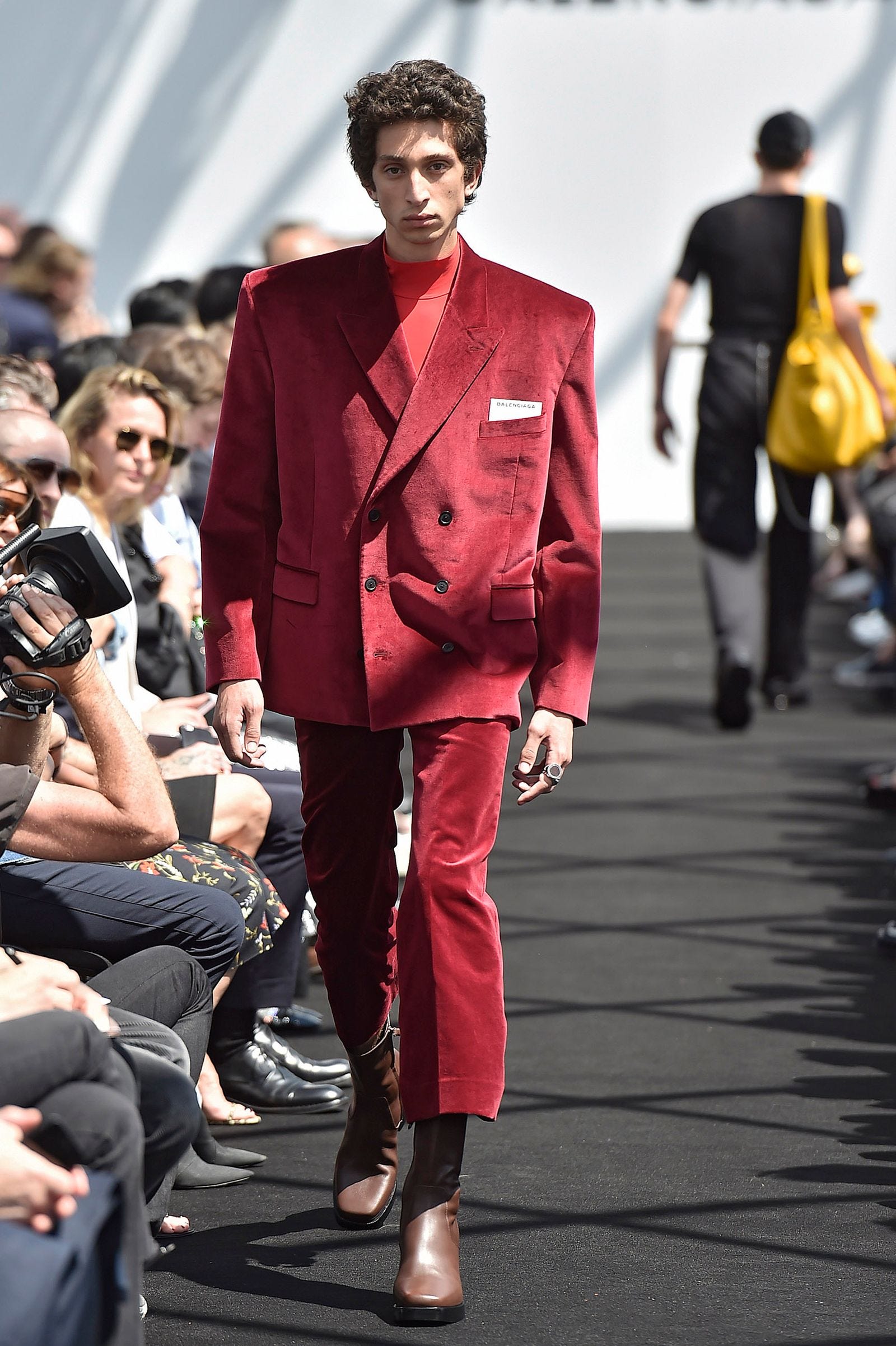
Taste was not the gatekeeper. Taste was the gate, and the gatekeeper was always power. The LA City Council did not pass an ordinance against wide lapels. They passed an ordinance against who was wearing them. The zoot suit violated no aesthetic principle. It violated a power structure’s rubric for which bodies were permitted to be expressive.
When a rubric encounters something it has no category for, it defaults to rejection. The only variable is the consequences. One sent a chair back to the design team, the other sent young men to the hospital.
It’s a lawn chair thing you wouldn’t understand
Of course, the origins of what is taste, or even comfort, isn’t always as nefarious. Fifty years after the Zoot Suit riots, Herman Miller focus-groups a mesh office chair made iconic by startups with too much cash and not enough runway: The Aeron.
Comfort scores: high. Aesthetic scores: catastrophic. The participants’ rubric was “leather executive chair.” The Aeron did not fit. Not because the chair was ugly. Because the rubric did not have a category for mesh. Herman Miller shipped it anyway.
It took about five years. The early adopters were technology companies, then design firms, then anyone who spent eight hours in a chair and cared more about their lower back than their office aesthetic. The Aeron did not convince people it was beautiful. It convinced them that “beautiful” was the wrong rubric for an office chair. Comfort, breathability, support: those became the rubric. And by the time the framework shifted, the Aeron was already there waiting. Best-selling office chair in history. MoMA permanent collection.
The thing that “had no taste” became the taste.
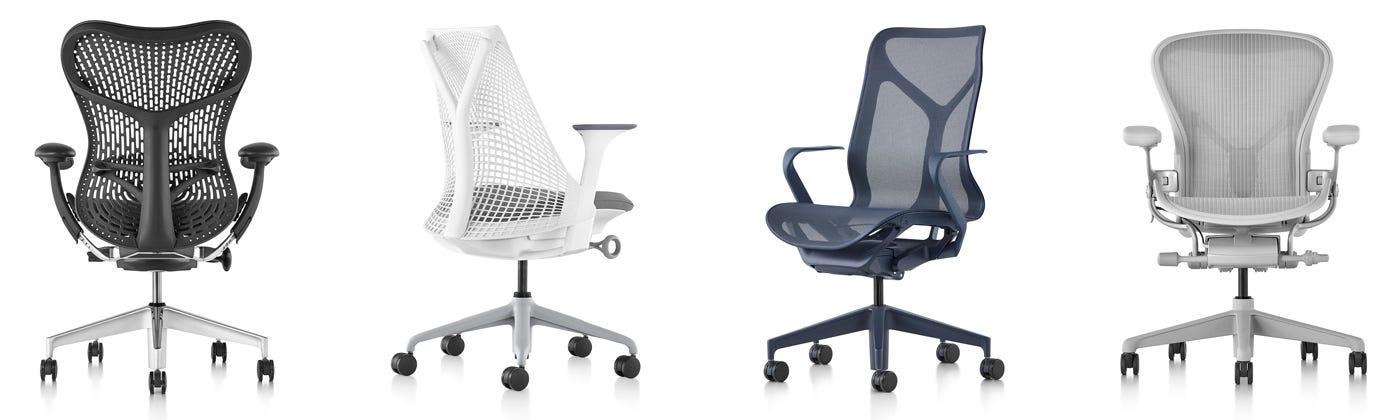
The focus group was not wrong about their preferences. They were accurate reporters of a rubric that could not classify what it was seeing. Same as the Salon with Van Gogh. Same as colonial servants with lobster. Same as the LA City Council with the zoot suit. When the rubric cannot classify what it is evaluating, it defaults to rejection.
The Aeron did not win because people developed better taste, it won because the rubric expanded to include it. The mechanism is identical.
The Aeron at least had an argument. Ergonomic data. Lumbar support research. Thermal regulation studies. The rubric it eventually created was backed by something measurable: people who sat in the chair for eight hours reported less pain. The “taste” followed the data.
But what happens when there is no data at all? No ergonomic study. No Jo van Gogh-Bonger curating exhibitions. No Sergio Zyman poisoning the competition. What happens when taste is nothing but the group deciding?
Six Seveeeeennnnnnnnn
Have you ever used a rotary phone? If yes, then the odds you have asked ChatGPT or Google “what does six seven mean” are almost certain. Like the strange spacecraft in Rendezvous with Rama by Arthur C. Clarke, humanity was obsessed with asking “where did this seemingly unexplainable thing come from?”
Now, it does have an etymological origin connecting a rap song to a basketball player, or to a street number, or a police code. No one really knows, but it doesn’t matter because the origin of the phrase carries no intrinsic data about how or why it is so hilarious and viral.
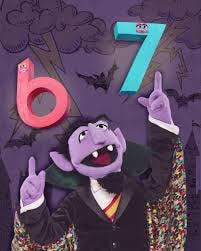
For a few months in 2025 and 2026 among Gen Z, the numbers 6-7 became a humor signifier divorced from any context. No intrinsic meaning. No setup. No punchline. No reference to anything outside itself. An entire cohort decided it was funny, and it became funny, and the person who could deploy it most effectively was considered to have “great taste” in humor. The people who did not get it were, by definition, outside the group, which reinforced the signal. If you didn’t know how to drop a 6-7 at the most perfect time, you were not cool or funny. And, the definition of “when is the best time to drop a 6-7” has no definition: the best time is when your friends all laugh, and you only know if it was the best time retroactively.
6-7 is taste reduced to first principles. Post hoc rationalization of group consensus. “They have good taste because their taste is good.” Tautology. There is no there there. There is only the rubric the group agreed on, and the social reward for performing fluency within it.
This is not a Gen Z phenomenon. This is every aesthetic judgment, stripped of its costume. The Salon that rejected Van Gogh was a group of men who agreed on a rubric and called it expertise. The colonial servants who loathed lobster were a community whose shared context became “taste.” The focus group that rejected the Aeron was a panel whose existing framework became the verdict. The police officers who decided that Zoot Suits were criminal because it was a crime if you wore one.
6-7 just has the honesty to be empty. Every other example of “taste” has the same emptiness at the center, dressed up in tradition or expertise or sophistication. But at the bottom of every one of them is the same tautology: it is good because we say it is good, aka design hiring rubrics.
Now, look at Starry Night again.
Oliebollen
I know you have seen Starry Night. Copies of it used to come in the mail with samples of Tide. But, you have probably never seen the oliebollen review.
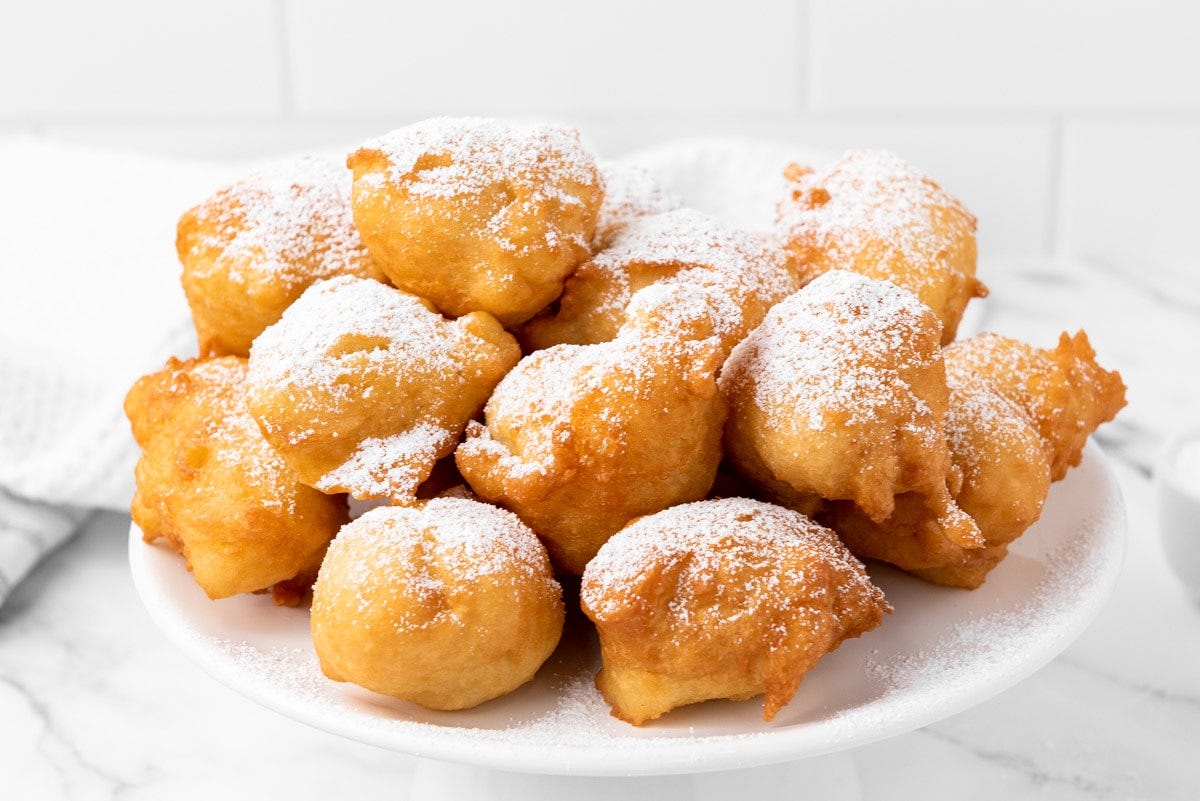
In 1905, a reviewer looked at Van Gogh’s swirling stars and saw oliebollen. Fried dough balls. That was his rubric. That was his 6-7. His group had agreed this was not good, and so it was not good. A more prestigious version of 6-7, but not a more rigorous one. Their consensus was not expertise. It was tautology wearing a better suit.
Then a twenty-eight-year-old English teacher built a different rubric from scratch. She organized the exhibitions. She translated the letters. She constructed the narrative of the tortured genius who had been failed by his own era. She placed the paintings in front of people who had never been told they were bad and gave them a framework for seeing what was always there.
Jo van Gogh-Bonger did not discover taste. She built it. With infrastructure. With strategy. With a rubric she wrote one exhibition at a time over thirty-five years. She sold two hundred paintings, and the man the Salon had dismissed became the most recognized painter in history. She sold Sunflowers to the National Gallery in London in 1924, one year before her death.
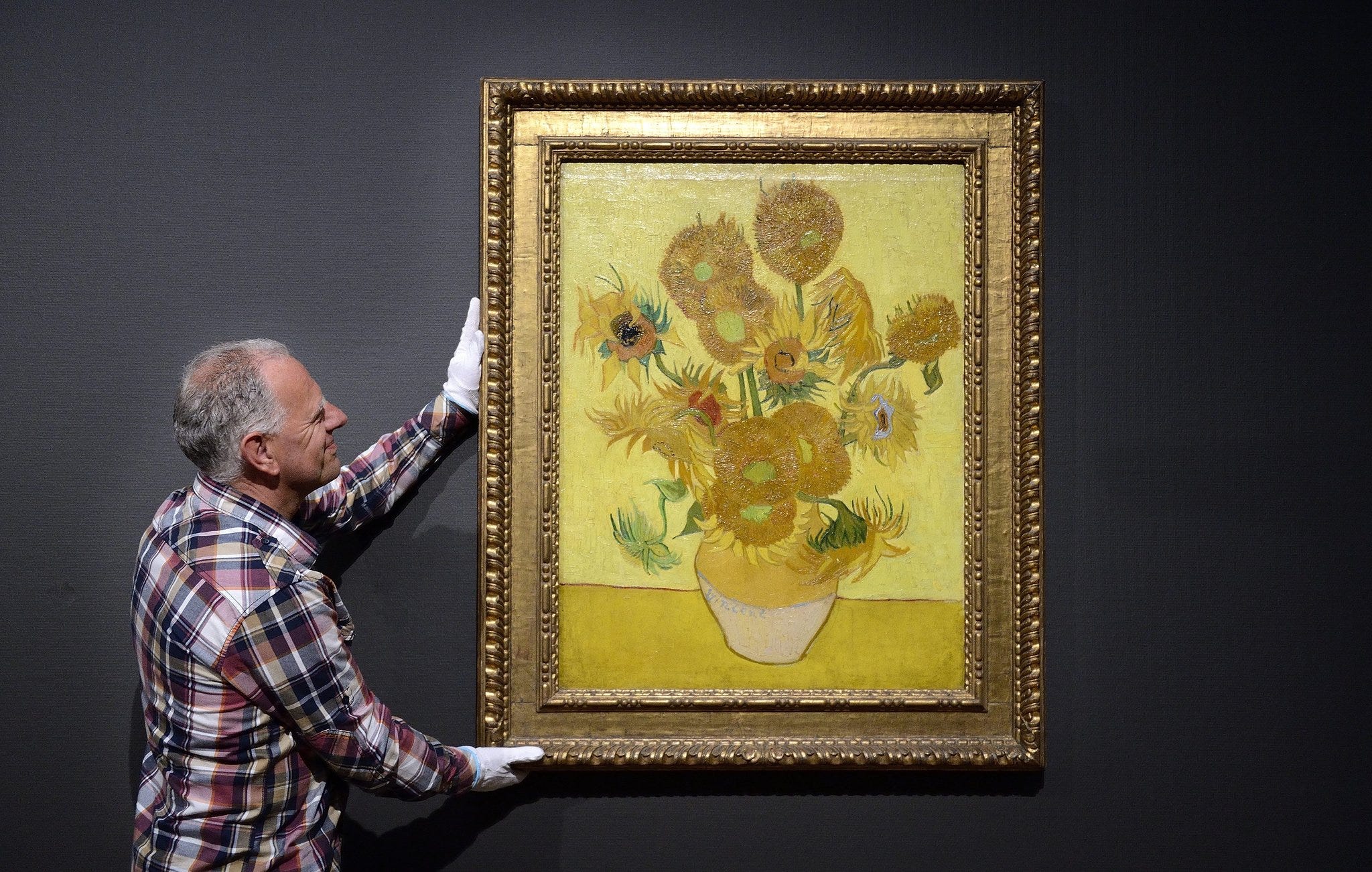
Van Gogh did not become a masterpiece because the world developed better taste. The world developed a better rubric. And one woman built it. Van Gogh did not become good. The world became able to see him as good.
So when someone tells you that AI cannot have taste, ask them what they mean by taste. If they mean the post hoc consensus that Van Gogh is a genius, a lobster is luxury, and a mesh chair belongs in a museum: that is a rubric. Rubrics can be written. If they mean the social gatekeeping that criminalized a suit on the wrong body and weaponized a cola to destroy a competitor: that is infrastructure. Infrastructure can be mapped. If they mean the pure tautology of 6-7, the group deciding and calling it quality: that is pattern recognition operating on group data.
Taste is not a moat, an intuition, or an ineffable trait. It is a rubric, and rubrics can be written, taught, and automated. Which is why AI does not need taste, it needs data and infrastructure, because none of us have taste, we are told what taste is, and some people are better at jumping on the trend fast enough to make their sleight-of-hand look like magic.
The people who control the rubric don’t just decide what is good; they decide what is possible to recognize as good.
Taste is assigned. Taste is not a moat; it is a system.